



Inside DiscoveryX: Key Takeaways for AI Innovation in Healthcare
By: Justin Wolting, Manager of Innovation and Product Development
I recently had the opportunity to attend DiscoveryX in Toronto, hosted by the Ontario Centre of Innovation. With its reputation for being Canada’s premier innovation event, DiscoveryX brings together entrepreneurs, investors, researchers, government, and industry leaders to showcase the strength of Ontario’s innovation ecosystem.
A recurring topic throughout the conference was the challenge organizations face in moving from interest in AI to meaningful implementation and adoption. That was especially evident during a panel focused on small and mid-sized businesses in healthcare, where speakers discussed the growing need for practical support, education, and expertise as organizations adopt AI tools and workflows. One idea that particularly resonated with me during this discussion was the concept of running “five-minute experiments” each day — small, low-risk opportunities to test new ideas or approaches. It was a simple but effective reminder that innovation often develops through consistent experimentation and incremental progress rather than a single breakthrough moment. This approach is valuable because it lowers the barrier to adoption, allows ideas to be tested quickly in real-world contexts as they arise, and helps organizations build momentum without requiring large upfront commitments or risk.
And it’s true that these innovations are continuing to emerge – for clinicians and healthcare organizations, many of the technologies discussed at DiscoveryX are likely to become increasingly visible over the next several years. While some are still in development, the direction of innovation is becoming much clearer:
- Agentic AI systems that can assist with administrative workflows, documentation, triage support, and surfacing relevant clinical information while keeping humans in the loop for oversight and decision-making.
- AI copilots and decision-support tools designed to help clinicians make faster, more informed decisions by synthesizing patient data, trusted evidence, and context in real time.
- More advanced automation and interoperability across healthcare systems, helping reduce repetitive tasks and improve coordination between platforms and care teams.
- Quantum computing research that could eventually accelerate drug discovery, genomics, and complex healthcare modelling — although many speakers noted these breakthroughs are likely still several years away.
- New healthcare and technology roles are emerging alongside these systems, including professionals focused on AI software engineering, AI governance, implementation, evaluation, and workflow design.
The last point is a big one, and one that was raised by in the keynote address given by the “Godfather of AI” and Nobel Laureate Dr. Geoffrey Hinton, who spoke about how AI is advancing quickly enough that organizations need to be intentional about how they evaluate, test, monitor, and improve the systems they put into real-world use. For me, that was one of the clearest themes of the event: innovation must move hand in hand with responsibility, and we will always need the “human” element for validation and accountability.
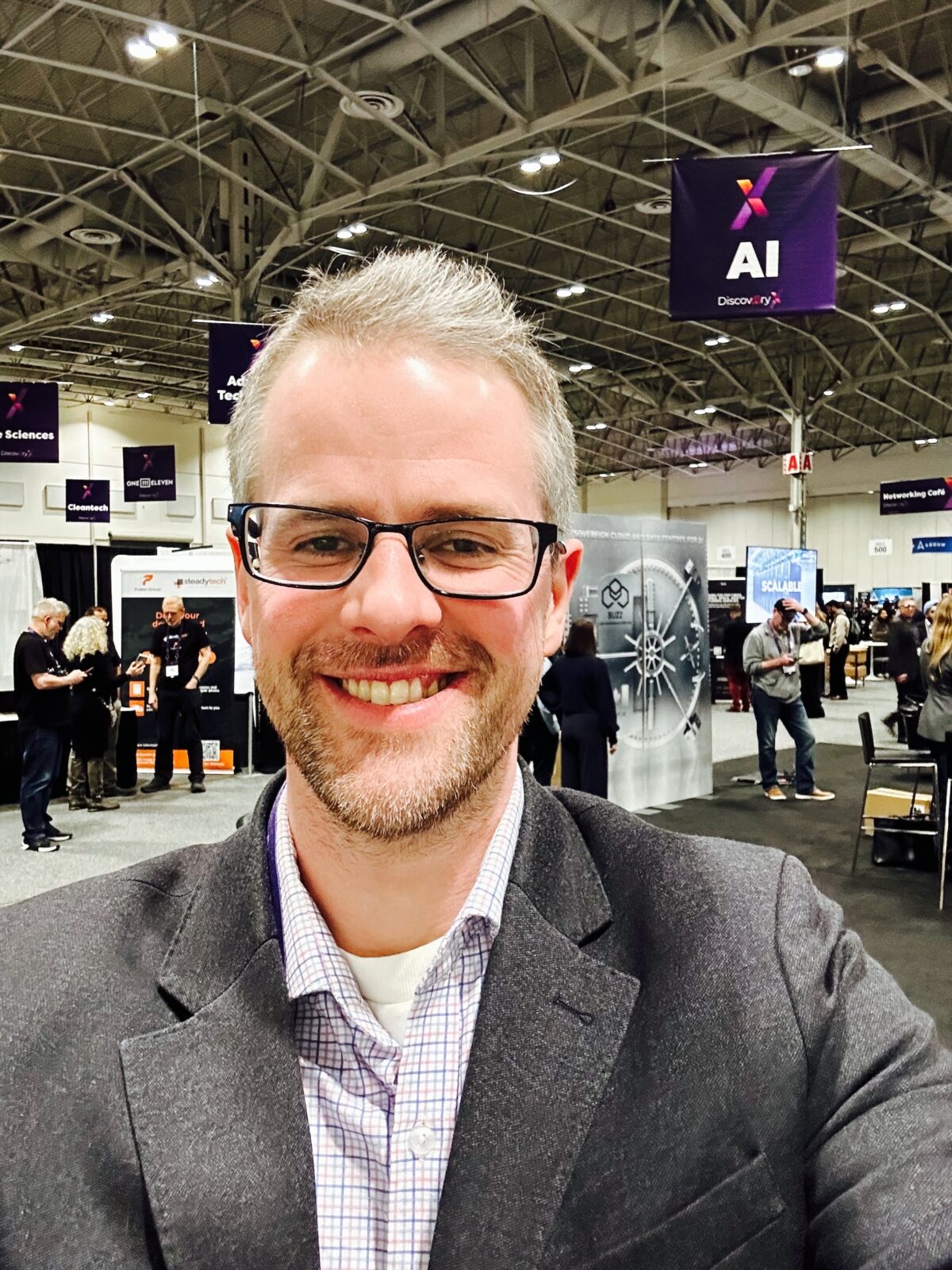
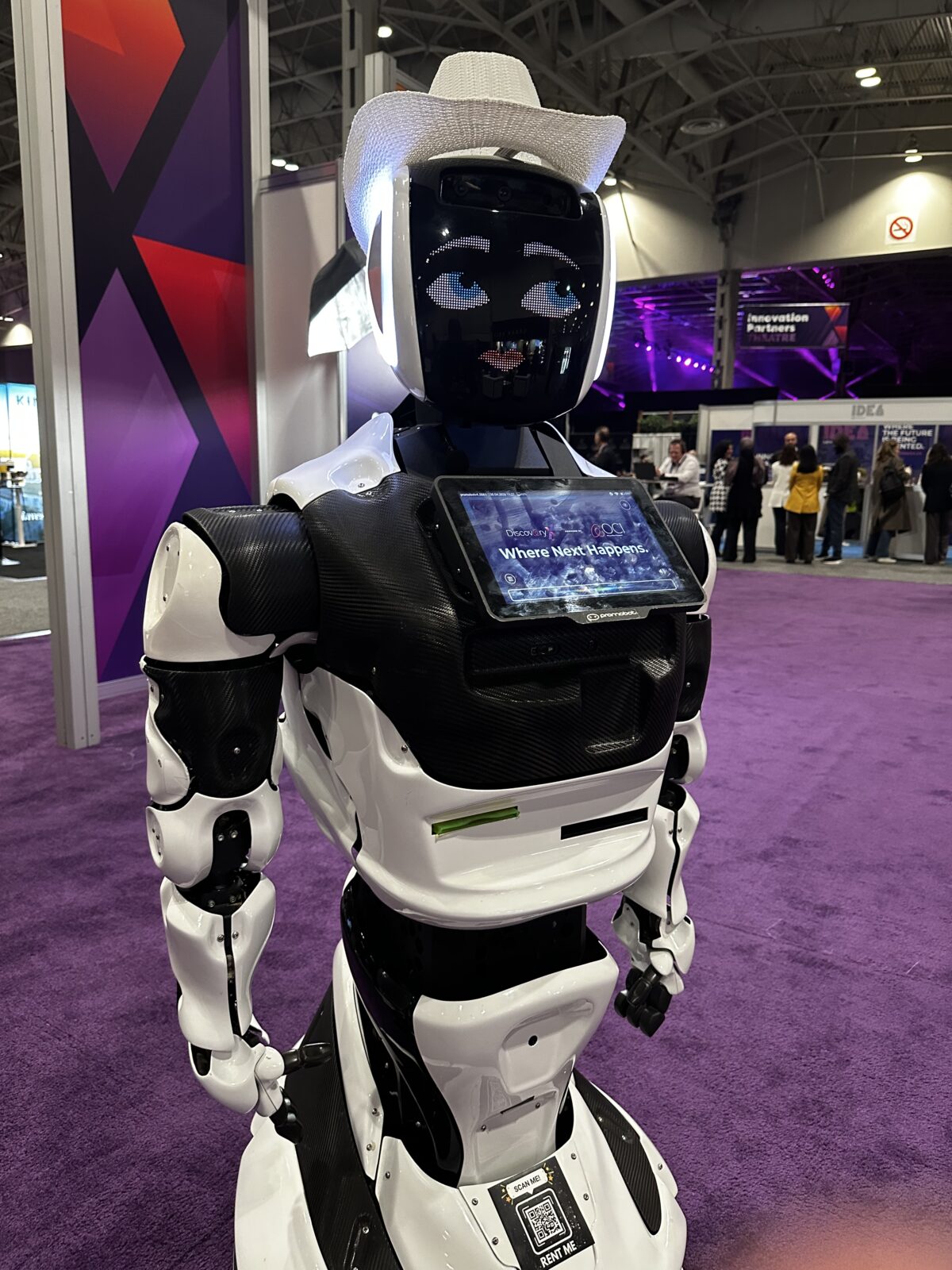
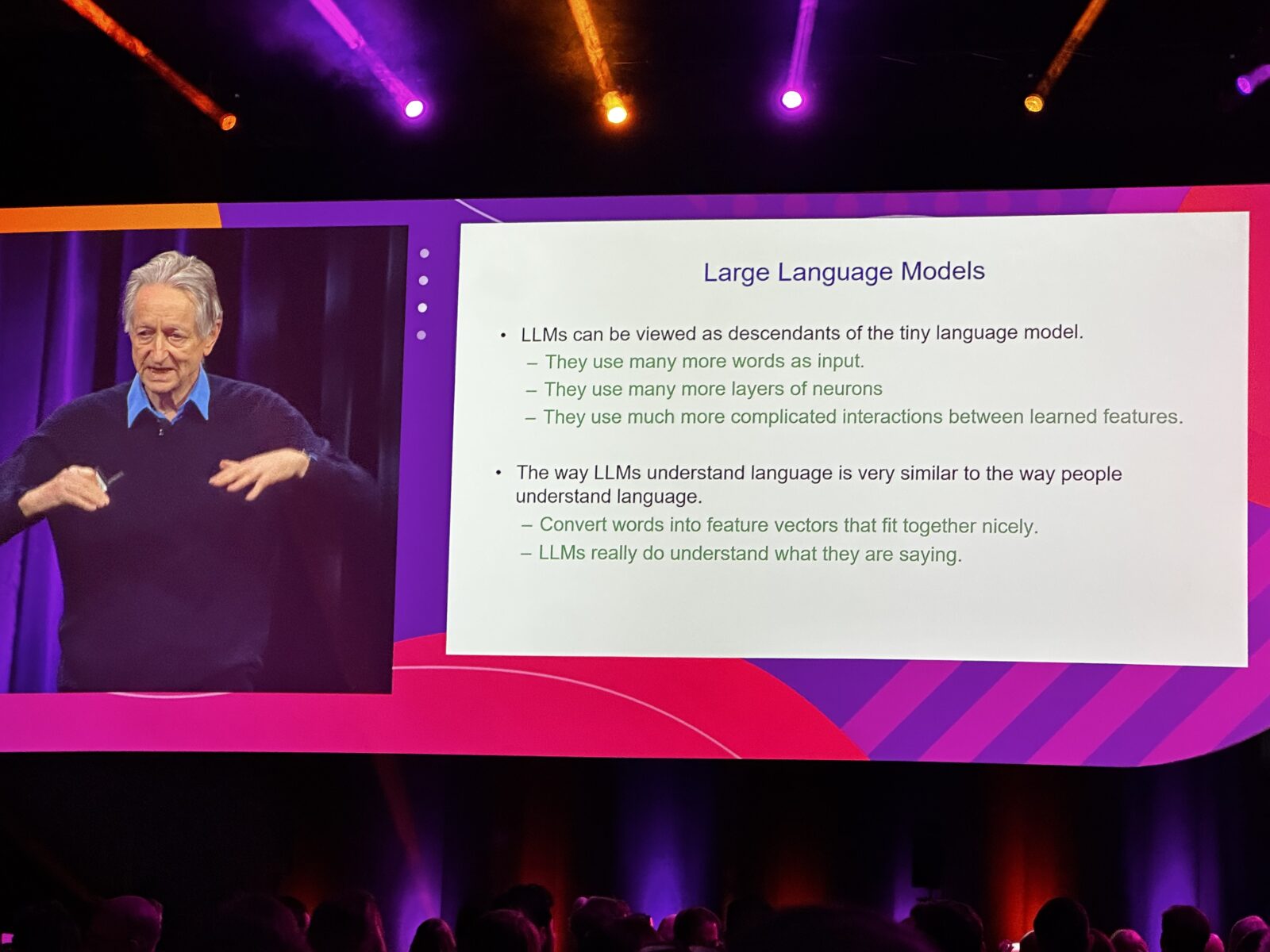
Beyond the sessions, what I appreciated most about DiscoveryX was the opportunity to see innovation happening across sectors. From healthcare and AI to cleantech and advanced manufacturing, the conference highlighted how much progress can happen when researchers, founders, investors, and industry leaders share perspectives and collaborate across disciplines, alongside a willingness to experiment thoughtfully and build with purpose. Events like this one are a reminder that some of the best ideas emerge through cross-pollination — when insights from one field inspire progress in another. That collaborative energy is what makes Ontario’s innovation community so compelling and forward-looking.
I am grateful to have been part of the experience, and I look forward to seeing how the conversations and ideas shared there continue to shape our future.
Interested in staying up to date with all things AI? Consider signing up for our AI Amplified news pulse, which isn’t the same as our monthly newsletter – rather, we send you need-to-know updates on AI as they arise.
AI Amplified: Sign up here
« * » indique les champs nécessaires
Get the latest resources and insights
-

Remembering Brian Sinclair: What His Story Asks of Us
Today marks National Day for Truth and Reconciliation, a time to listen, learn and reflect…
-

Making Digital Health Stick: The Crucial Role of Change Management and Practice Facilitation
Good implementation starts by understanding the people who will use the solution every day. Learn…
-

Work With HEAL to Identify the Workflow Challenges That Matter Most
Amplify Care’s Healthcare Experience and Advancement Lab (HEAL) invites clinicians and their care teams to…
-

From Idea to Solution: Get Hands-On with Our Vibe Coding Workshop for Primary Care
Amplify Care’s Healthcare Experience and Advancement Lab (HEAL) is hosting a free, in-person workshop where…