


What Clinicians Should Count on from Digital Health and AI: Introducing the Digital Health Charter
Originally hosted: November 5, 2026 | 12:00 PM EST
For too long, digital technologies have contributed to clinician burnout rather than easing the demands of care. The Digital Health Charter outlines a shared vision for a better digital health experience, with seven guiding principles designed to help clinicians work more efficiently, reduce unnecessary burdens, and focus more on patient care.
Join Dr. Mohamed Alarakhia, CEO of Amplify Care and practicing family physician, for a discussion on how the Charter can help shape digital health technologies that better support clinicians, strengthen care delivery, and put patients first.
What you’ll learn
- Explore the Charter’s seven guiding principles. Understand the shared vision for a better digital health experience for clinicians.
- Reduce clinician burnout and improve efficiency. Learn how digital technologies can better support clinicians and reduce unnecessary administrative burdens.
- Strengthen care delivery and prioritize patients. Discover how digital health can create more time for meaningful patient care.

Get to know the speakers
Dr. Mohamed Alarakhia
Chief Executive Officer
Julia Hutton
Nurse Practitioner, Centre for Family Medicine and Clinical Advisor, Amplify Care
Julia Hutton, MScN, PHCNP, is a dedicated Primary Healthcare Nurse Practitioner with the Centre for Family Medicine Family Health Team. With a Master of Science in Nursing and over 15 years of clinical experience, Julia delivers comprehensive care with a focus on women’s health, chronic disease management, and preventive medicine. Julia began her career in emergency medicine at Mount Sinai Hospital and later broadened her experience as a nurse in Australia. Since becoming a Nurse Practitioner, she has served in diverse primary care settings, including the Guelph and Upper Grand Family Health Teams, where she developed deep expertise in interdisciplinary collaboration and patient-centred care. Alongside her clinical work, Julia has a strong interest in digital health innovation. She brings her frontline experience to her role at Amplify Care, supporting the implementation of virtual visits, telehealth solutions, and quality improvement initiatives.

Webinar recording
View full transcript
Transcript
00:10 It’s great to see people join. We’re going to give it
Transcript
00:15 A few minutes. Looks like we have a note, an AI note taker as well.
Transcript
00:20 I’m not sure if that aligns with the Charter or not, so I don’t know, I’ll have to think about that one.
Transcript
00:24 We will find out.
Transcript
00:26 Yeah, that’s right.
Transcript
00:36 We’re going to give it a few minutes here and then we’ll get we’ll get going.
Transcript
01:04 Some attendees that are duplicated. I want to know how you do that, because I’d love to duplicate myself.
Transcript
01:31 Clinicians always run late, so we may give it a little bit of time. Julia doesn’t never runs late, but
Transcript
01:37 Always on time.
Transcript
01:40 The rest of us doing, yeah, so Jula’s actually joining us from clinic today, so that’s really great
Transcript
01:48 Yeah, made sure I had some time right before so I wasn’t rushed.
Transcript
01:52 All good
Transcript
01:53 Planning, that’s all. I should make sure I incorporate that into my clinic as well.
Transcript
02:00 I don’t know if just being behind stresses me out more than some people, I don’t know. So I think that’s why I tend to be more on time, but I… because I get very… yeah, I just like to know what I’m doing, I know what the patients are expecting, and just
Transcript
02:15 Yeah, keep things on track.
Transcript
02:18 Okay, great. There’s a lot of echo. Maybe do you mind turning your sound off for a moment, Julia, and then maybe I can speak and see if that gets better. And that’s what we’ll do is if the other person speaking, we’ll maybe turn off our
Transcript
02:35 Put ourselves on mute. Stacey, is that better? Can you hear us better? Can you hear me better that way?
Transcript
02:45 Still all echo. Do other people hear an echo?
Transcript
02:51 Okay, thanks, Stacey.
Transcript
02:56 Let’s see if other people hear an echo
Transcript
03:00 Okay, perfect. Not here and echo there. Okay, and then, yeah, for some of them
Transcript
03:05 Julia, it’s going to be good if we’re both off mute then, because I do think it’s going to be a conversation as well. Okay
Transcript
03:19 We’re going to give it 30 more seconds and then get going.
Transcript
03:54 Yep.
Transcript
03:55 Now it’s sort of like, how long is 30 seconds? Because I always play this game with my kids, right? They don’t like it’s like a minute. It’s always jump the gun, right? So you can’t, it’s hard to wait.
Transcript
04:00 That’s right.
Transcript
04:01 And when you say, just take 5 minutes, you’re like, it’s already been 5 minutes, it’s been 30 seconds.
Transcript
04:03 That’s right. That’s exactly right.
Transcript
04:12 Okay. We are going to get going. Julia has to get the patients at one, so we’re going to make sure we wrap up on time. Welcome. Really happy to be talking about this today. The digital Charter is something that we’ve talked about for years, actually
Transcript
04:29 getting out there. And with the advent of many, many tools, you know, AI tools, particularly, we thought it was really important to put this out and to really launch the dialogue. Today is about starting a dialogue to continue to get feedback
Transcript
04:45 To improve the digital health charter, to have that conversation. I’ve had the fortune of participating in patient charters before and really helping to get those out. This charter is focused on clinicians, which often doesn’t happen, to really look at
Transcript
05:00 How do we support clinicians in the care that they deliver? What are the rights of clinicians? What are the expectations that clinicians should have in the technology that is supposed to support them? We know there’s really good tools out there, but we also know that
Transcript
05:16 Historically, tools have burned clinicians out. Digital tools have usually made things harder and not easier, and so we think it’s really important to put this out there and then to judge the tools that we’re going to use by the principles in this charter, so that we can
Transcript
05:34 avoid some of the challenges that we’ve had in the past. We’ll move to the next slide.
Transcript
05:41 I’m Mohammed Al-Rakim, a practicing family doctor and CEO of Amplify Care. And really, my aim has been to make sure that we have tools that work in clinical workflow and that when they do, we can scale and spread those tools. And I’m really fortunate to be joined by Julia Hutton
Transcript
05:59 who’s a nurse practitioner, primary care nurse practitioner, who works with me and has been tremendous for our clinic, has over 15 years of clinical experience, although she’s only 25, so I’m not sure how she does that
Transcript
06:14 I wish.
Transcript
06:15 And delivers comprehensive care and with a focus on women’s health, chronic disease management and preventative medicine. Really happy to have Julia join me today to talk about this. Julia, is there anything else you wanted to mention about
Transcript
06:29 Your background
Transcript
06:31 I don’t think so. I mean, I’ve worked with Amplify Care for quite a few years now, so I’ve been delving into the digital health area for quite a few years with Muhammad and with the team. And really the main… the reason I think that this charter really is so important, because
Transcript
06:47 You know, digital health really shouldn’t be shaped just by what technology can do, right? It should be shaped by what the patients and clinicians actually need it to do. So, yeah, so I think this, this charter and the principles in it are really, really important.
Transcript
07:01 Yeah, thanks, Joanne. Yeah, Julie has been guiding us on a number of initiatives to make sure we have that really important perspective. What in what ways can we help patients and clinicians and what areas should we be tackling? We’ll move on to the next slide
Transcript
07:17 And before I get into this, I will say like you can put your questions in the Q&A. The chat is also sort of available, so really whatever is easy for you. Happy for you to do that. The Q&A does allow people to vote things up. So if you try to do it in the Q&A, that’s great. If that doesn’t work for you, then yeah, put it in the chat
Transcript
07:36 We’ll make sure we get to those questions. Really want to acknowledge the clinicians who’ve participated in this and give us insight and a push to get this out there and really help shape this work. It’s been really important
Transcript
07:52 We know that the work is not done, that there is additional work that needs to happen so that we can continue to refine, improve, update, change the Charter so that it really meets clinician needs. And thank you very much to those who have invested a lot of time
Transcript
08:08 And this, which is a big team, but the four individuals here have authored this work. So Lisa Harmon, Sokirtha, Samar Lingem, and Lira Hosseini, who’ve really been key in sort of getting this together and really shaping this and iterating and incorporating the clinical feedback. So really appreciate
Transcript
08:30 their tremendous work on this. We’ll move to the next slide
Transcript
08:36 And so the vision really is about improving the clinician experience. What is required from digital tools that will support clinicians moving forward? How do vendors, policymakers, decision makers, health system leaders make sure that those things are in the tools that we
Transcript
08:53 Procure, use, scale, and spread. The Charter is meant to guide the selection of those tools, really set a bar for what we want to move forward with, support evaluation, do the tools meet the principles? Are they actually, you know, for example, safe? And we’ll talk about that
Transcript
09:12 And then, if tools do meet these, then they’re more likely to be adopted and have active use moving forward. So this is really the the touchstone for us in terms of making sure that the tools are valuable
Transcript
09:27 And allow us to then understand that and then scale and spread good tools because that’s also important is if we have something that’s really good, we shouldn’t it shouldn’t just be used in one part of the province or in the country. We should scale and spread it if it’s reducing clinician burden
Transcript
09:43 We should actually make that a standard.
Transcript
09:46 We’ll move to the next slide
Transcript
09:49 And so developing this has been a labor in terms of making sure that we’ve got the right information. There was an environmental scan looking at Canada-wide sources for this to make sure we’ve incorporated
Transcript
10:04 The right information, number of organizations have published good work on this, so we wanted to make sure we didn’t start from scratch. We’re really leveraging the principles that are already out there and formulating a charter that allowed us to draft some principles from existing work
Transcript
10:20 Those principles underwent clinical review, you know, really important. This is for clinicians and so it has to be by clinicians. So really there was some good insight from clinicians on that, shaping the principles and really framed
Transcript
10:36 This is expectations from technology. What does technology need to do to help clinicians? Not just to put out, you know, just some guidance, or this would be nice to, but this is what
Transcript
10:48 the technology needs to do really. And so that really helped us to iterate and shape and make sure that it landed on what was important to clinicians. And so we created seven principles, and we’ll talk about those. And you can think about them as rights. We didn’t call them rights, we called them principles. We’ll sort of think about
Transcript
11:07 You know, how does that get framed moving forward? But we think it’s a really good start in terms of the things that we should expect. And Julie and I are going to go through some examples of where this has been applied or where it needs to be applied.
Transcript
11:20 What we need to do is we’re really launching it today, and so we need to get additional clinician input and input from organizations and other partners to really make sure this is, hits the right points that we’re not missing anything that we have the right
Transcript
11:36 Things in here so that we can evaluate technology against this. We need to, as technology evolves, we need to make sure that this stays up to date and meets the moment in terms of those different things, in terms, you know, data is one example, in terms of, like, data sovereignty that we
Transcript
11:56 Make sure that we are
Transcript
11:58 really looking at that. We’re going to continue to iterate based on those things, based on additional clinician feedback, and then we want to translate this information to the field into real tools. Like, this is how we’re going to look. I know as an organization at digital tools
Transcript
12:13 How do we help others to do the same thing and implement these principles?
Transcript
12:18 We’ll move to the next slide
Transcript
12:20 And so there are seven principles that we’re going to go through and tell you about real examples of how they have been implemented and how they can be implemented. So we’ll go to the next one.
Transcript
12:34 So the first one is about patient safety, patient safety and clinical quality.
Transcript
12:42 Tools need to make sure they demonstrate safety and reliability in real world clinical settings. We know, for example, that AI tools can be developed sort of in isolation or in one clinical setting, and then when they translate to another setting, they don’t work, they break
Transcript
12:58 You know, we’re maybe used to them sort of, you know, being good or we’re told that they’re good and then we actually implement them into the real world and they don’t work. And this is going to be increasingly a problem as we are leveraging data from the EMR
Transcript
13:14 To do things or to give us like clinical decision support and then you transfer it to another EMR and the practice down the street and it doesn’t work. It breaks, and that can lead to things that are not safe. And so we need to be really aware of this and make sure that we’ve got the safety
Transcript
13:32 at the forefront, and that the tools also are consistent. So reliability means that they’re consistent from one environment to the other. So is it… is it the same in a rural environment versus an urban environment? And also, transparency is really important, that we understand what the tools are doing
Transcript
13:48 Why they’re giving us the answer that we’re not just so pleased that the eye is saying, you know, you’re such a great clinician, and we’re forgetting that, like, you know, it’s based on certain data and might not be giving us the right answer. So we need that transparency
Transcript
14:04 to be clear.
Transcript
14:07 We’ll go to the next slide.
Transcript
14:09 I thought this was a really great way to look at that in terms of like, what’s the risk to patients and the degree of autonomy of solutions. And as the risk increases and the autonomy increases, we need to be more careful and we need to do more evaluation. So this graph was
Transcript
14:26 produced by the Canadian Medical Protective Association, looking at, you know, what’s the risk to patients, how much patient information is in these tools, and then to what degree does the tool automatically doing things? And so an example like AI scribes
Transcript
14:42 The clinical workflow tools, not very much autonomy, right? It’s producing the note, but the clinician is there turning it on, taking the note, putting it into the EMR. There’s some risk, like it does deal with patient information, so you need to make sure the patient information is
Transcript
14:59 stored securely, the AI is not learning from patient information, etc. But in general, like a low risk tool with low autonomy and so it’s easier for us to take those tools on
Transcript
15:13 AI inbox or sorting test results. If the AI is automatically sorting out results and telling you what’s important or not, there’s a bit of an increased risk to the patient. I was on call yesterday and was busy call clinic in the evening
Transcript
15:29 There was a stat result that came in. Our process for that is, you know, I do get a message in my inbox, but it’s so busy, like I’m going from room to room to room, talking to patients and supporting them, and I may not look at my EMR inbox, and so the staff actually comes out and gives the clinician
Transcript
15:45 the results on paper, right? So that’s our fail safe to say, here’s a stat result. I’m going to give it to you in paper. As we use AI to search through our inboxes and highlight what’s important, do we forget about those other steps and say, oh, we don’t need the human
Transcript
16:00 anymore. We’re gonna just… the AI is going to let you know what’s important. Well, what if I’m busy and I don’t look at that inbox? What if it doesn’t tell me what’s the most important thing? So those are things that we actually need to do have more rigor around to make sure we’re not making it unsafe.
Transcript
16:16 From a patient care perspective. And then, you know, as we get into
Transcript
16:22 providing recommendations, so AI clinical decision support. So one patient I saw yesterday, I did use AI to say, like, what is, what is the other differential that for this patient? And it was really helpful in providing some advice. But we need to understand, you know, if it’s doing that, what data is it based on
Transcript
16:40 What am I doing with that? Am I automatically just using that information and doing testing that it’s recommending, or am I thinking about it? So as we get into those recommendations, decision support, we need to, there’s starting to be more autonomy
Transcript
16:55 Where AI can do more automatic things for me. And there’s also increased risk to patients because we’re actually using that to take direct action for patients. And so we need to have additional rigor around that. So really to say that we need to have these checks and balances
Transcript
17:11 As we’re looking at these things. And so that’s one reason we go to the next slide.
Transcript
17:17 Why and Amplify, we’ve just published this will be coming very soon into the Journal of Medical Internet Research, where we published the Amplify Safe AI framework
Transcript
17:32 And so these are 5 steps really looking at how do you make sure you implement safe AI safely in a practice, identify the use case. So we talked about inbox management as a use case. What are all what are the considerations around inbox management? So
Transcript
17:49 You know, for example, if there’s stat results, how do you deal with those stat results? Let’s look at the different tools then in step three that are out there so that we can compare those tools and how they function. Then let’s pick a tool that we think meets our criteria, but then let’s really look at the safety of that particular tool, how it works
Transcript
18:07 How does it interact with humans? What is it, you know, picking up? What does it not pick up? So let’s test it out. And then if we’re going to scale that to 10,000 clinicians, what does that look like? What is their environment look like
Transcript
18:24 How do we scale? How do we keep on checking on that? And so, you know, we’ve just developed this. There’s a checklist that says, as part of this. And so as if you’re interested, you can, you know, connect with us and we’re happy to share this. It should be published very soon, officially. And so we’re happy to share this so that you can leverage this in your practice. It’s really meant for clinicians
Transcript
18:45 And teams to leverage this. So that’s sort of an example of what we’re doing to try to help with this principle in terms of safety and reliability of solutions. We’ll move to the next slide
Transcript
19:00 And I’m going to pass it over to Julia to talk about patient email.
Transcript
19:04 Yeah, so even the older types of technology need to be considered in these situations as well, and email communication can be a really important component of accessible patient-centered care when it’s used appropriately, it can improve communication, support continuity of care
Transcript
19:20 reinforce clinical recommendations, facilitate follow-up, reduce barriers, all of those things. So great. But patient email addresses and the content of emails must be managed as part of a broader patient safety, privacy, clinical quality, and risk management strategy
Transcript
19:36 Email shouldn’t simply be viewed as an administrative convenience. It is a form of healthcare communication that can influence our clinical decisions, patient understanding, and health outcomes.
Transcript
19:47 So this also specifically applies to auto responses to patient emails. So auto replies can be a super valuable component of a healthcare organization’s communication strategy. They can improve transparency, establish expectations, and reassure patients that their messages have reached the organization.
Transcript
20:06 But in healthcare specifically, there is the concern that autoresponses need to be designed to be very carefully, or need to be designed very carefully, because an automated acknowledgement is not the same thing as a clinical review, or a triage, or a confirmation that the patient’s concern is being addressed
Transcript
20:23 The greatest risk is that patients might also interpret an automated response as confirmation that the clinical concern has been received, assessed, or placed in an appropriate follow-up process when none of these things have actually occurred.
Transcript
20:44 Yeah, thanks, Juliette. And widely used, right? Technology that can be really helpful from a clinician efficiency, communicating things to patients, but you’ve got to take all those factors into consideration to make sure it’s safely implemented.
Transcript
20:57 Yeah, absolutely
Transcript
21:00 Okay, we’ll move to the next slide
Transcript
21:03 Okay, so I’m going to talk about this principle. So tools that are built around the way care is actually delivered.
Transcript
21:10 So always really important to remember that innovation doesn’t automatically translate to improvement. They are not the same thing. So this principle aims to ensure that the digital health tools actually
Transcript
21:23 burden and cognitive load for clinicians. The effort required to adopt a tool should be acknowledged and appropriately supported through training, protected time, reimbursement, implementation assistance, or other practical measures that are suited to the delivery care context in that case.
Transcript
21:39 So, next slide, we can go through what an example of that looks like.
Transcript
21:44 So, a great example for this in my particular practice, and I think in many, is eConsult. So this is a secure web-based tool that allows clinicians timely access to specialist advice and can eliminate the need for an in-person specialist visit
Transcript
22:00 So wait times for many specialists in my region is months, if not years, and as an expert in women’s health, there are many things I can manage in primary care on my own, but there are also many things that are also outside of my scope. But I might be able to manage them if I had some specialist guidance, or maybe not.
Transcript
22:18 So with the same amount of effort it would take to just do a regular referral, I can access the expertise of a gynecologist and get a response usually within a few days, if not a few hours, which is amazing. And it allows me to manage the patient myself in some cases, or at least start some of the investigations, or potentially some of the management
Transcript
22:38 And while the patient waits for actual care from a specialist if I do that referral in the end. And so this type of online specialist access really streamlines timely patient care. And this is all well and good, as long as the end user knows how to get set up on the platform and how to use it. So, in the case of eConsult in particular.
Transcript
22:58 We’re lucky that there is change management available through AmplifyCare to both onboard and provide ongoing support as needed.
Transcript
23:05 Anything else to add to that, Muhammad?
Transcript
23:09 No, you’re muted.
Transcript
23:10 That was great. I got myself off mute and muted again. So, you know, no, I think that’s really great. Like, I use the eConsult all the time. We do have staff support to use it, which is helpful, and, you know, I think with eConsult, it was actually developed by clinicians, right? Two clinicians came together and said, this is a problem we need
Transcript
23:27 It started from that, so I think the other thing is the clinicians understand the problems and we need to make sure the tools fit and support the clinicians. And then we, from a technology perspective, we need to enable in the easiest way possible so that you can launch it right from your EMR, right? So I know that
Transcript
23:43 That’s the progress of where we’re going with the consult is to make it even easier for clinicians to access.
Transcript
23:51 Great, next slide.
Transcript
23:52 We’ll move to the… Yeah, we’ll go to the next slide then. And so this principle we term clinician voice from design to daily use. And so it builds on what we’ve talked about previously, that clinician expertise is really key to
Transcript
24:07 Support the understanding of the problem, really shaping where tools should be, what problem they’re solving. But it needs to continue, right? So you can have clinicians initially involved and then they drop off and there were, you know, procure a tool or we get a tool that doesn’t work for us
Transcript
24:26 And so you really need that ongoing clinician feedback and input to continue to improve the tool because, you know, you might see something that looks fantastic, but when you implement it in clinic, it doesn’t work so fantastic or it doesn’t consider the different variations that you have or different staff that’s involved. And so we really need to
Transcript
24:44 Have that ongoing engagement from clinicians and staff, I would say, as well, to make sure that you are making the tool usable, that it actually reduces time, and that, you know, it changes based on circumstance, right? If things
Transcript
24:59 have changed into clinical practice that you understand sort of, okay, you may not have as much staff now that you had before, so how does that tool continue to work and support you? So it’s really about the ongoing engagement of clinicians. Clinicians are busy, but it’s really important to figure out ways to engage clinicians
Transcript
25:15 And so they shape the tool so that it can be used hopefully more regularly than it actually does sort of help with patient care and improve the clinician experience as well.
Transcript
25:26 We’ll move to the next slide.
Transcript
25:28 And so one example of doing this is to do an innovation procurement. An innovation procurement is really about looking at what problem you’re looking to solve. So say Julie is going to talk next about eReferral forms
Transcript
25:44 But if I talked about Forbes in general, I dread when a form comes into my inbox. It’s like one of the worst things for me to do is fill out a form. And so say we’re sorting out that sort of issues, you know, filling out forms, whether it’s for like insurance or, you know, government forms, disability forms
Transcript
26:01 you know, if we’re solving that problem, we want to make sure that the patient is supported, the patient can tell the patient’s story, and has a simple way to fill out the form or get the service with minimal sort of effort, and that might mean, you know, we’re looking at patients can provide the information themselves, or the information is
Transcript
26:19 Is retrieved from certain other areas, and from a clinician perspective, you know, often it is about getting the patient’s voice in there. So, can the patient themselves get the patient voice in there, and as a clinician, can I, maybe I don’t have to fill out a form, or maybe I can just fill out
Transcript
26:35 Certain parts of the form and so if we look at that as where we’re aiming for reducing the number of forms and only filling out the parts that I need to, that’s what we’re going to procure. Solutions that actually support… support that
Transcript
26:50 You know, the clinicians will be involved to say, you know, these are the things that I need. And then as the technology comes forward, it’s going to you’re going to make sure you’re going to see that it meets the needs. And they might not have it right off the bat, but over time, working with clinicians, you can get there
Transcript
27:06 You know, we’ve done a number of innovation procurements as an organization, e-referral was one of them that we started almost nine years ago. It’s now moved into four provinces and supporting four provinces. So really started as something was a clinical problem, wait times, getting people, patients access to care
Transcript
27:23 And, you know, eReferral was a solution. We iterated clinicians participated. We made like over 300 changes to the solution. And so now it’s spread across the country. And the second one was secure messaging, a virtual care sort of platform
Transcript
27:39 that supported interaction between patients and clinicians leveraging mostly, like, messaging, and that platform has now spread to three provinces. So it’s really, you know, good to see if we start with the right context, supporting
Transcript
27:54 Value… the values of value-based procurement improve the patient experience, improve the clinician experience. We develop and get tools, that actually meet the workflow needs and then can scale and spread.
Transcript
28:06 We’ll move to the next slide.
Transcript
28:10 Julie, hand over to you
Transcript
28:12 Yeah.
Transcript
28:13 Yep, so just to just expand a little bit on eReferral in this particular context and a specific example of standardized forms, obviously most people are familiar with eReferral at this point, and in so many ways it makes our jobs easier and enhances patient
Transcript
28:30 access to care. Kind of we all agree on that, I think. And the thought is that a standardized eReferral form would be something that would better patient care and improve clinician experience by not including any excessive clinical information, but really just the information that is appropriate and relevant to that particular
Transcript
28:51 referral, and also allows the clinician to know what to expect in the referral, the referral form. It’s not different questions every time, you know what you’re going to fill out, it… you can fill it out relatively quickly. By presenting the information in a really consistent and standardized way
Transcript
29:07 then the triaging and scheduling on the other end will be facilitated based more on the appropriateness and urgency of the referral, as well as the preferences of both the clinicians and the patients involved.
Transcript
29:18 The key to success to this type of initiative, though, is obviously the consistent clinician engagement and review of the design, sort of, all the way through to daily use. Otherwise, we end up with a tool that doesn’t end up improving patient or clinician experiences, and luckily, in the case of eReferral
Transcript
29:35 Amplify is constantly, engaging clinicians for feedback and figuring out how they can make this tool better
Transcript
29:46 All right, so next slide, unless you have anything else you want to add there, Mohamed.
Transcript
29:50 Oh, that’s great.
Transcript
29:51 Okay, perfect. So next is principle four, so data that protects, connects, and informs
Transcript
29:59 So what this means is that there really must be a large focus on the responsible protection and management of patient data, information exchange across care settings should be appropriately supported by the systems that are in place, and care for the individual patient, as well as the broader needs of clinical practice and population health
Transcript
30:16 should be informed by the data that’s being collected.
Transcript
30:20 So next slide, and we can go into what an example of that would be
Transcript
30:25 So, one example, that I thought of with this particular one is in clinical practice in general, would be the sharing of images between care settings. So that’s
Transcript
30:36 like, between primary care and a specialist. So a lot of referrals still are not quite on e-referral yet, and we’re doing a lot of referrals still by fax. So, it doesn’t allow for the clear exchange of images, unfortunately. So the need for a secure and adequate program that shares this type of information is really important for protecting patient data
Transcript
30:58 Also, improving the patient’s care and the needs of the clinical practice. So luckily, eReferral actually is one of the tools to help solve that issue and allows the type of information to flow more easily back and forth through the system. We just need more specialists getting on board with that so that we can share these. I was doing
Transcript
31:18 Derm Cafe referral today, actually, and they specifically say on their referral form, do not fax images, please. And so, yeah, so just kind of reiterated this point that we do need to make sure that the systems that we’re using are protecting patient data
Transcript
31:37 And are allowing the exchange of data back and forth in, an easy way
Transcript
31:43 Yeah, really great example. And, you know, I know there’s a plastic surgeon who, you know, it’s really valuable for her to get the images and facilitates triage. And so you’re rolling out and now it’s sort of rapidly expanding to get more and more people, but
Transcript
32:00 I think those are examples where it makes a big difference for patient care that you can sort of communicate what’s going on image is worth thousands of words. And so that will allow that patient to be seen in a more appropriate way
Transcript
32:15 Oops.
Transcript
32:16 Another way in terms of data is clinicians are overwhelmed with data, right? So it’s sharing the right data. And so in my inbox, unfortunately, I was looking at it earlier today. There’s a lot of stuff that I need to deal with and sort through, and so is there a way for us to make sure that’s more appropriate, the documents that are coming into my EMR
Transcript
32:34 Would there be a way for me to really, like, streamline what that is and decide what are the most valuable things that are coming in and really subscribe to those things that come into my inbox and clinic that I think are important, and then desubscribe to things that I don’t think
Transcript
32:51 are valuable, right? You know, if a patient is admitted, sometimes I get
Transcript
32:55 Like, 30 notes that come in and a number of those are not, you know.
Transcript
33:01 Not needed for me as their family doctor, right? They’re more internal to the hospital, so there’s work happening on this, but really it’s about how do we continue to refine that so that the data that’s shared is the right data that allows the clinician to have the picture of the patient
Transcript
33:17 Not overwhelming, so then you’re actually just trying to get through it and not really have enough time to sort of synthesize things.
Transcript
33:24 Okay, we’ll move to the next slide.
Transcript
33:29 And so it’s really important that as we roll out tools and as we get tools, they’re procured as a system or the clinician sort of takes on the tools that there’s ongoing need to enhance, improve those tools and make sure that
Transcript
33:49 perform well for clinicians. I know, you know, scribes are an amazing tool that clinicians have a lot of benefit from, but a number of them, when they update or they get an update, it loses all your preferences, so then you have to start again, and you know, the notes are sort of not exactly how you’d
Transcript
34:07 like to have them, right? So that’s a really, like, you know, good feedback, right? To say, like, you know, if you’ve got certain preferences, you don’t want them to go away once something updates, and so how can that be maintained? And the performance of the tools continue
Transcript
34:22 you know.
Transcript
34:24 So the clinician doesn’t have to re redo things. And, you know, we know with AI as well that AI will not give you the same answer twice. It will give you a different answer. But how do we actually make sure that that is that that’s safe
Transcript
34:40 That you’re… you’re getting the right information, it’s based on the right information that there are not other sources of information that take you away from the answer that you should be getting. And so that’s really important that there’s some type of monitoring, and that the clinician engagement is about
Transcript
34:56 Making sure that these tools are accountable, that there is that sort of consistency in the output of these tools, so that they don’t sort of change over time. And there’s a way to sort of rectify them if that actually, that actually happens
Transcript
35:11 And that the tool that are there for, like, a workflow perspective are prioritized by vendors, even though they may not be the most financially lucrative tools. Like sometimes the functions that we actually need are things that are not sort of
Transcript
35:28 bringing in additional revenue for vendors. But they’re really important to the use of the core product. And that is important because we do pay for the core product, and it’s important that product meets our needs. We’ll go to the next slide, and Julia, you have an example.
Transcript
35:42 Yeah, so an example of this is when I first started at Amplify Care, my main focus when I was hired on was virtual care. That was before the pandemic even. Things were getting started up with that
Transcript
35:59 So it’s really since then, it’s an area of digital health that really has not progressed since that time. There still aren’t solutions that are integrated into the EMR, and as a result, would then require a separate schedule
Transcript
36:14 So developers created these tools, but then didn’t take any accountability for enhancing them further in order to actually meet the needs of clinicians in the real world. So, just, you know, reiterating, it’s super critical to have an ongoing evaluation and monitoring to contribute to the continuous quality improvement and technology enhancement
Transcript
36:33 Based on user and patient needs. And in the case of virtual care, that lacked that type of evaluation and monitoring, and the tools just simply aren’t used regularly in practice at all anymore, as a result.
Transcript
36:50 Yeah.
Transcript
36:51 Yeah. And that was a wasted opportunity, right? As you mentioned, like before the pandemic, we did a lot of work on this and actually prepared people for the pandemic, so they’re able to use the tools. And then it’s really dropped off in terms of the video consultations
Transcript
37:02 And there’s some other reasons, like there’s some funding reasons for that, but also like the tools haven’t integrated seamlessly into the systems that we use, and that doesn’t allow us to take advantage of additional functionality. Like there’s advanced technology that can get a patient’s vitals from just looking at a screen and it would be amazing if you could actually like
Transcript
37:22 You know, the CF patient and see what’s going on with them. Now we’re stuck with phone calls again, right? And so it is a bit sad that we had this opportunity, yet because of the lack of integration and the push to make sure these tools are integrated
Transcript
37:39 And maintained that, you know, this has fallen by the wayside.
Transcript
37:49 We’ll go to the next slide then, Julia.
Transcript
37:51 Okay, perfect. Okay, so the next principle is responsible and transparent innovation. So there’s lots of advanced digital and AI tools out there. So they must be supportive of clinician judgment and they must ensure that they are clear about how they work and what their limitations are
Transcript
38:08 And they must also have continuous monitoring, as we previously discussed over time for safety bias and overall performance in order to be useful in clinical practice.
Transcript
38:21 So as healthcare increasingly adopts advanced digital technologies, AI, you know, predictive analytics, automated decision support systems, and virtual care tools, if they ever continue to get better. There’s one principle that must remain very central to the innovation of these tools
Transcript
38:41 And that’s that humans must remain meaningfully involved in the design, implementation, oversight, and the use of these technologies. So we can go to the next slide, and we’ll just kind of talk a little bit more about that. So technology has this enormous potential to improve healthcare access, efficiency, quality, patient outcomes
Transcript
39:02 AI can help clinicians synthesize complex information, identify patterns, support earlier detection of disease even, reduce administrative burden, and improve clinical decision-making. But healthcare is fundamentally a human-centered profession. We always have to keep that in mind
Transcript
39:19 Clinical decisions involve so much more than interpreting data or identifying patterns. They require clinical judgment, contextual understanding, ethical reasoning, empathy, communication, and appreciation in general of a patient’s individual circumstances.
Transcript
39:35 The goal should not be to replace human judgment with technology, but to use the technology to strengthen and support human judgment. So, you know, how can we apply this to the real world? So this can be applied to an AI tool, you know, such as a new one called Ask Lepias by Virtual Hallway
Transcript
39:55 So when using a tool like this, it’s important to ensure that you’re not relying blindly on something that just might provide us with the best… that might not provide us with the best clinical outcomes. So Asclepius may be a great choice in general for an AI decision-making tool in clinical care for Canadian clinicians, because it is pulling specifically from Canadian guidelines
Transcript
40:15 Which other tools might not be. So that’s great for that one. But then we have to ask, does it have all the guidelines, or just specific ones? If different guidelines conflict with each other, which one does it give you the information from? So.
Transcript
40:32 These are often difficult questions to answer, but as a result, clinicians have to remain in the loop and up-to-date with guidelines themselves, since they ultimately are making the decision for the care of the patient in front of them. AI tools are excellent for guidance, but there’s a meaningful difference between a question that can be answered through
Transcript
40:51 you know, clinical evidence, and one that can be… that requires professional experience, contextual judgment, and just general, expertise.
Transcript
41:01 And just to build on that, for clinicians, it’s always important to trust your gut, right? Like there’s nothing that can really replace that and you know, important to realize these tools can be really helpful, right? They synthesize the evidence
Transcript
41:16 They also have a blind spot in terms of what’s going on with the patient and what the patient factors are. And one example in terms of bias of AI systems is that I had a patient a couple months ago that
Transcript
41:33 The parents were interested in supporting the patient, had some symptoms related to ADHD-type symptoms, and I talked about
Transcript
41:42 naturopathic sort of thing to try for patients, a remedy to sort of try for patients, and I was making a referral to a pediatrician for this child, and the AI actually… I didn’t ask it, but unprompted said, hey, did you know that there’s
Transcript
41:57 not the same level of evidence for this naturopathic remedy as these other things. And I was like first, like, there is evidence for that naturopathic remedy. And second, like, I don’t think the parents are going to go do the other things. They were interested in sort of a different approach. And so
Transcript
42:13 Yeah, you know, we can sort of see sometimes AI may be pushing us in certain areas, but you’ve got to look at the patient family in front of you and really look at what would work for them. And in this case, I’ve known that child since the child was born and his parents for many years, and so that was the approach that they wanted to take. And
Transcript
42:31 I thought it was a good, a really good one to start. So we’ve got to sort of understand that, you know, there are biases that can from the data that trains the model to what how the model deals with conflicts, right? So when you’re asking a question, if there’s conflicting guidelines, how do you deal with that
Transcript
42:47 Conflicting guidelines. What is it going to surface? Is it going to surface both of those sort of guidelines so that you can then sort of make a decision or talk to the patient about the conflict, and then make a decision with the patient. And so there’s lots of examples about bias and sort of in systems and overcoming
Transcript
43:03 overcoming that, so important for us to be aware of them. The challenge is that, you know, the AI can be so good that you start to just do what it says, and so you’ve got to avoid that as a clinician, and I think as a system, we’ve got to make sure the safeguards are built in so that clinicians remain sort of the
Transcript
43:19 With patients, right, making decisions
Transcript
43:23 Absolutely.
Transcript
43:24 We’ll move to the next slide.
Transcript
43:27 So in terms of equitable access to digital health, we’re such a diverse country. We have indigenous communities, we have folks living in very rural areas, remote areas. We have under-resourced environments, urban and rural
Transcript
43:44 Where there are challenges with access, challenges with technology. And so we need to make sure that we provide equitable access to care and digital health is being part of that. And we look at enablers in some areas
Transcript
43:59 Where it’s easy to sort of implement, and other areas where it’s going to be more challenging, but we want to make sure the clinician still has the support, and that might mean that there’s extra resourcing, extra staff there, because we can’t get equivalent support to some digital tools
Transcript
44:14 But so that the clinician has enough support, and so that the patients actually get that support. So this is really important as we design tools that we think about the limitations of technology, and we stay focused on how does it improve the patient experience and how is this improving the clinician experience. And if we talk about that experience
Transcript
44:31 It can be a digital tool, but it could be other things. And so we need to make sure that we keep that at the forefront, that that’s the goal, right? It’s not to deploy tools, it’s to really improve the way that clinicians can care for patients based on the different things that they have available.
Transcript
44:48 We’ll move to the next slide
Transcript
44:51 And so really about improving equity of access, there are inequities in terms of patients. So just, you know, mentioning like access to the internet, doing things like online appointment booking
Transcript
45:07 You know, not all patients will want to do that, and so there’s some great AI tools. There’s a AI medical office assistant that will take phone calls. That might be a great solution for, you know, for, say, someone who doesn’t want to do online appointment booking can just talk to the AI and the AI can book
Transcript
45:22 Book an appointment, but you know it was actually raised in a call I was on the other day, you know, but what if the patient doesn’t have a phone even, right? Like, what if there’s a patient who is homeless or precariously housed? How do you help that person, right? Get care? And so it’s challenging, right? Like, the answers are not
Transcript
45:40 Always straightforward. But how do you bring care to the person? Do we use some technology to free up people so that we can support people who don’t have access to technology in a better way? And so that’s something to look at. What are the costs for this? And Julie will talk about an example
Transcript
45:57 And, you know, how do we make sure that the tools that we develop as we, you know, developing more sophisticated tools that may require increased access to technology, well, how do you actually scale that to areas where technology is not available? Julie, I’ll hand it over to you
Transcript
46:14 to talk about an example.
Transcript
46:16 Yeah, so when it comes to inequities for clinicians, there’s the similar barriers as similar to patients where maybe there’s not access to phones or internet access or those sorts of things based on if they’re remote or where they’re located. But the other is that there are inequities for clinicians based on the type of clinician
Transcript
46:35 One example of that is open evidence. So this is another similar to Asclepius, it came out much before that, but an AI powered medical information platform and it’s a tool that is available to doctors
Transcript
46:52 I mean, throughout North America, and I don’t know if beyond, I don’t know enough about that, but certainly, throughout North America. But it can’t be accessed by nurse practitioners in Canada. We think NPs in the U.S. might be able to, but in Canada, we can’t access it because we don’t have the right
Transcript
47:08 licensing number, or that’s compatible with the sign-up process. There are some Canadian NPs that do have access, because they signed up before that loophole was closed. So I was not one of those lucky ones, unfortunately. So, yeah, so it’s a great tool that so many clinicians, particularly physicians are using
Transcript
47:30 throughout Canada and the US is not accessible to Canadian nurse practitioners. So, and if nurse practitioners don’t have equitable access to the tools, how can we also provide equitable care to patients? Also, similar to that between, you know, nurse practitioners sometimes and physicians is the cost of tools. It’s not often in the budget for NPs
Transcript
47:52 to be using AI scribes or things like that in our practices, just based on budget. So we’ll use sort of free trials or if the clinic, is able to,
Transcript
48:07 procure that for staff, and then we can use it in those cases, but a lot of the time, cost is a… is a barrier for NPs as well.
Transcript
48:22 Right.
Transcript
48:23 Yeah, thanks for that, Julia. And so some of these arbitrary decisions, right? Like there’s like, there’s no rationale behind nurse practitioners not getting access to tools like that. And I would say physicians also complain about not having funding for these tools too
Transcript
48:30 Yeah, absolutely. Yep
Transcript
48:31 Right, so I think it’s a comment, but I do feel like, as a system, we need to make sure that clinicians have equitable access to tools, particularly as we’re looking at what is efficiency that they’re getting? How does it help with patient care? You know, how are we then sort of supporting more patients, right?
Transcript
48:47 Potentially with these tools, and they need to be, you know, available for clinicians to use.
Transcript
48:53 Yep
Transcript
48:55 Okay, we will go to the next slide, which really is our open discussion. So we’re happy to take any questions or comments from you. I think there is one question in the Q&A. So if you’ve got questions in the Q&A, you can put them in the Q&A or the
Transcript
49:14 The chat so Fred, thanks for your question. Is OTN the preferred platform for virtual care and has it been integrated into any electronic health records like practice solutions? And so, you know, OTN has a virtual platforms
Transcript
49:30 That can be used, but there is actually a provincial list of certified virtual platforms. And so I think after this webinar, we can send out a link to that provincial list where they’ve actually… they have a number of platforms that you can use for virtual care that have gone through
Transcript
49:47 The privacy and security assessment. So I think it’s like any of those platforms. It has not been integrated into practice solutions, unfortunately. And so that just what Julia was talking about in terms of these virtual care platforms have
Transcript
50:02 By and large developed in parallel to the EMRs, and it does make things more challenging when you have to
Transcript
50:12 Jump on to another solution. You know, log in again to connect to the patient. So I do feel like as we move forward with looking at primary care supports and even another areas, long-term care, etc
Transcript
50:28 We’re like, how does it fit into the whole system and how does it have the functionality that you need? And how do we actually communicate that that’s what we need and then make sure we actually get it. I think that’s really important. Clinicians shouldn’t be hopping
Transcript
50:43 From one platform to another. Julia, do you have any thoughts on that?
Transcript
50:47 Yeah, agreed. I did use a platform during the pandemic with another private clinic that I was working with. And yeah, it was great because it was kind of integrated into the system that I was using. I’m forgetting the name of it, but
Transcript
51:06 It’s one that’s used typically more by, like, physiotherapists, massage therapists, that sort of thing. So, yes, it was great that the schedule, everything was integrated, but it didn’t have the other functionalities that are useful for someone who’s working in, like, a more, like, medical practice.
Transcript
51:23 It was more useful for more of those allied health. So yeah, that one, it was great, but had other limitations. So, yeah, limitations either way, and just something that just needs to have continued, you know, looking at by the vendor, to make these things work for clinicians.
Transcript
51:42 Yeah, and there are EMRs that have integrated virtual care right into the way that they function and the schedule and it’s sort of really easy to do that. The challenge is, you know, people have existing EMRs and you want every
Transcript
51:57 You want to raise all boats, like you want every EMR to have access to these functionalities and any system actually that a clinician uses. And so I feel like there’s, as we look at this charter, there’ll be like, you know, what would we expect the system to have, right? Is that a functionality that should be there
Transcript
52:15 That we should be pushing for and saying
Transcript
52:18 Like, really? Like, we don’t have that functionality where we can connect in with patients and family in this way, that’s not acceptable in our healthcare system.
Transcript
52:30 Any other questions or comments that people wanted to make?
Transcript
52:47 Okay, maybe we’ll go to the next slide.
Transcript
52:51 So we want to hear from people. Oh, here, there’s something in the chat. Let me just
Transcript
52:59 Oh, okay.
Transcript
53:00 I would say just a thank you. Very timely
Transcript
53:01 Yeah, to the discussions.
Transcript
53:03 Okay, amazing. Yeah, and like happy to follow up with you or support the things that you’re looking at. I think the aim of this is to really get it out there and then look at how do we make sure technology sort of evolves to meet the needs. So yeah, thank you very much
Transcript
53:20 For that, we want your feedback. Like, this is really… we’re launching the charter today, and we want to make sure that it meets clinician needs. So if you’re a clinician on the call, please provide feedback. If you’re not a clinician, reach out to clinicians. Send this off to people. We want to collect that feedback, iterate on
Transcript
53:38 On this, you know, formalize it, and then really judge things based on it, right? Really make sure that we are… that clinicians rights with respect to digital health are being valued and met, and that we are able to
Transcript
53:56 Then look at the tools and say, like, here are the tools that actually meet this. Here are the things that actually are valuable for clinicians to implement so that we can help with some of that work. So there is the feedback form in the chat as well for you to fill out. You know, we will
Transcript
54:13 circulate this and would love for you to sort of share it with others in your groups. We want to make sure this is… we continue to get enough feedback for this so that it reflects what the community wants, and then we are able to sort of get it.
Transcript
54:28 Get it out there. Julie, any… we’ve got one more slide, but any final thoughts from yourself on the charter?
Transcript
54:36 No, I don’t think so. I think just reiterating the importance of it, and that, again, technology is only useful if it enhances patient care and clinician experience. So any feedback that anyone has is welcomed and valued for sure.
Transcript
54:56 Yeah, thanks very much. And we want to have that, now we have the bar to look at what should the technology do and then how do we actually judge things against this bar? And if things are not meeting the standard, then
Transcript
55:09 We need to to work with them and push them to sort of to meet the standards, so I’m really excited with how do we move forward in terms of now using this as a measuring stick and helping things get there, and hopefully for clinicians this will lead to technology that doesn
Transcript
55:26 Cause you to tear your hair out like I have, and it really allows us to sort of have things that are more useful, right, because the capacity and complexity are challenges in our health system. We’ll go to the next slide
Transcript
55:39 And so this is, we have a newsletter that so you can subscribe to that on the QR code on the right. The feedback form again is on the left there, really happy to sort of get your feedback and your colleagues, please circulate widely
Transcript
55:57 To get feedback on this, you know, really, you know, pleased to start this conversation. Really grateful for, to Julia for being here and supporting this and, and your ongoing support for all the initiatives
Transcript
56:12 Really bringing it down to like what’s the most important thing for patients, what’s the most important thing for clinicians. So, Julie, I’m going to let you get back to your clinic. Thank you very much.
Transcript
56:22 Thank you. Yeah, it’s my pleasure.
Transcript
56:25 And thanks, everyone, and we will be in touch and I’m sure we’ll have additional conversations on this moving forward.
Transcript
56:33 All right, thanks so much, everybody.
Transcript
56:34 Okay, thank you. Thank you. Bye.
Get in touch
Interested in partnering with us or learning more about
what we can offer you? Please reach out here.
Get the latest resources and insights
-
Who Owns the Work? We All Do. We Are All the OHT.
A guest blog post by Angela Martin, Practice Facilitator and Digital Health Lead who speaks…
-
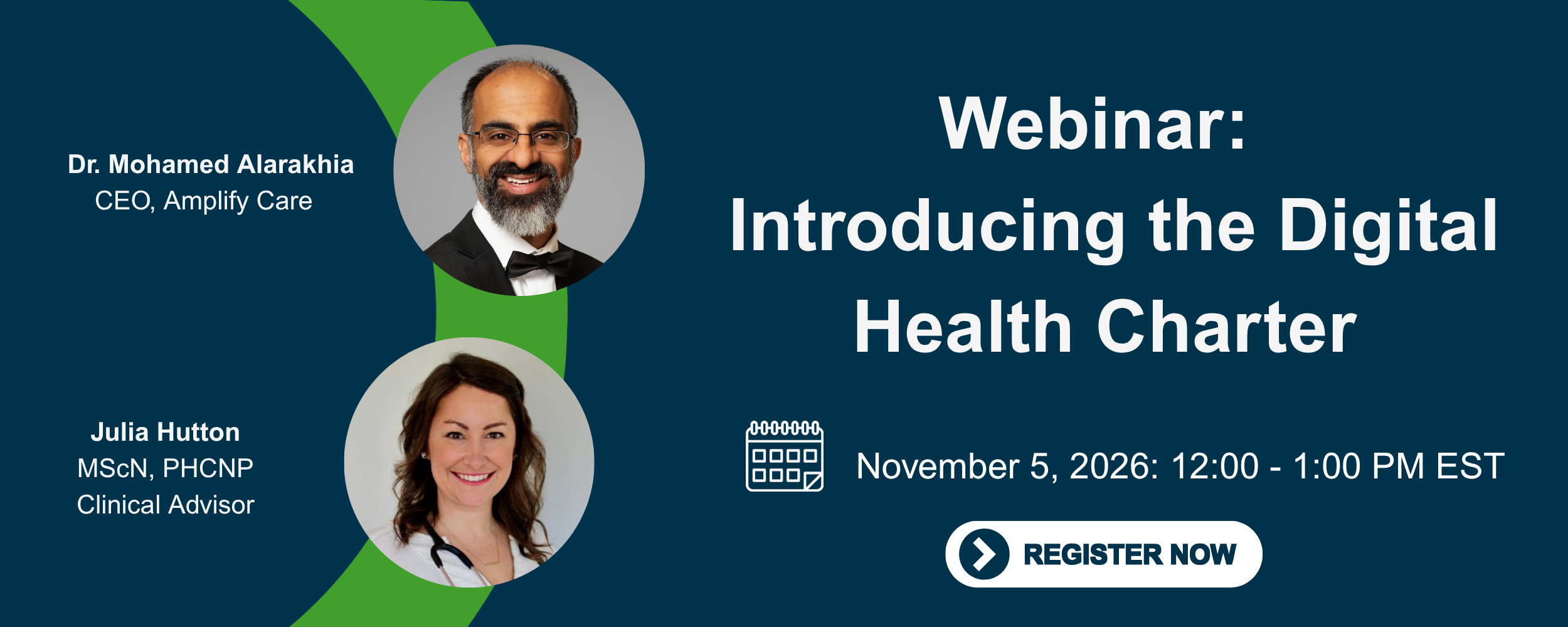
Upcoming Webinar: What Should Clinicians Expect from Digital Health? Introducing the Digital Health Charter
Join us on November 5, 2026, for a webinar introducing the Digital Health Charter, exploring…
-
Got 15 minutes? See Our EMR-Integrated Screening Prompt for Chronic Kidney Disease (CKD) in Action!
Join us for a 15-minute demo of our EMR-integrated CKD screening prompt and pre-populated test…
-
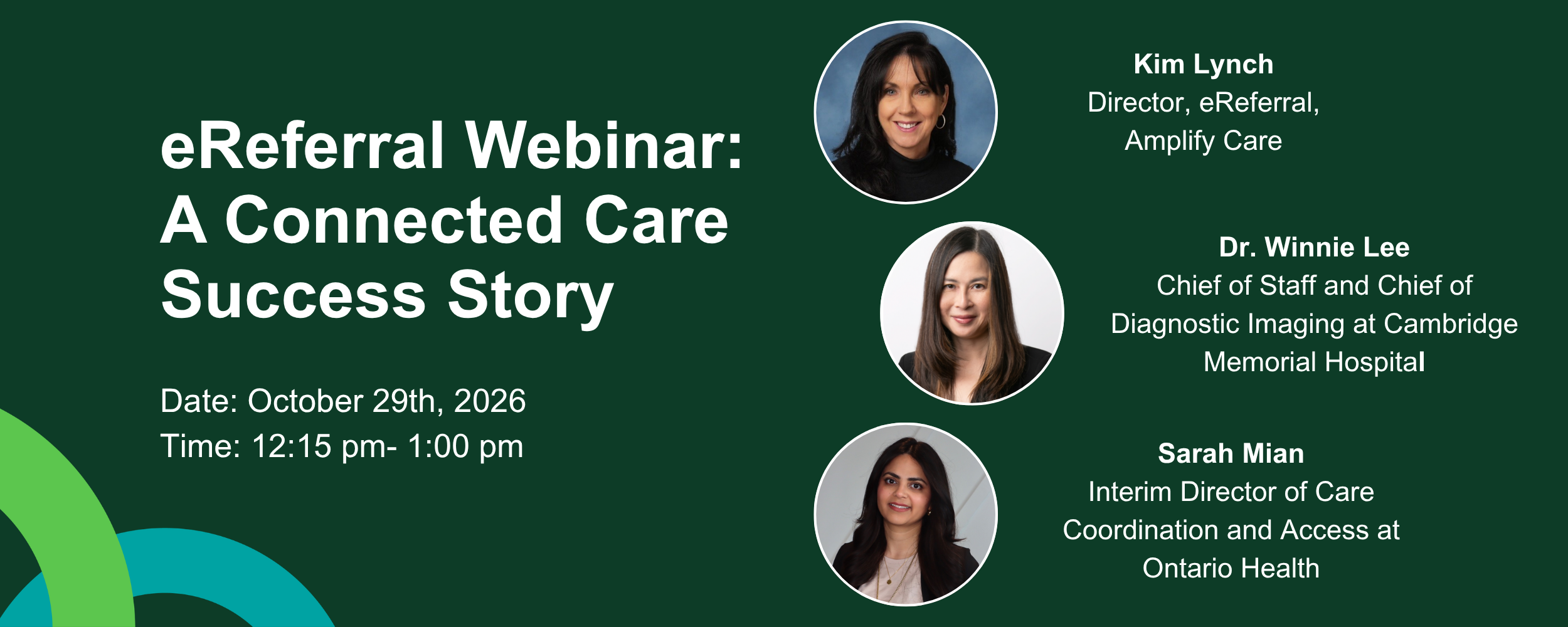
Upcoming Webinar on How eReferral is Building a More Connected Healthcare System
We’re co-hosting an upcoming webinar, eReferral: A Connected Care Success Story, which will explore how…