



A Glimpse into the Future of Digital Health at HIMSS 2026
By: Justin Wolting, Manager of Innovation and Product Development
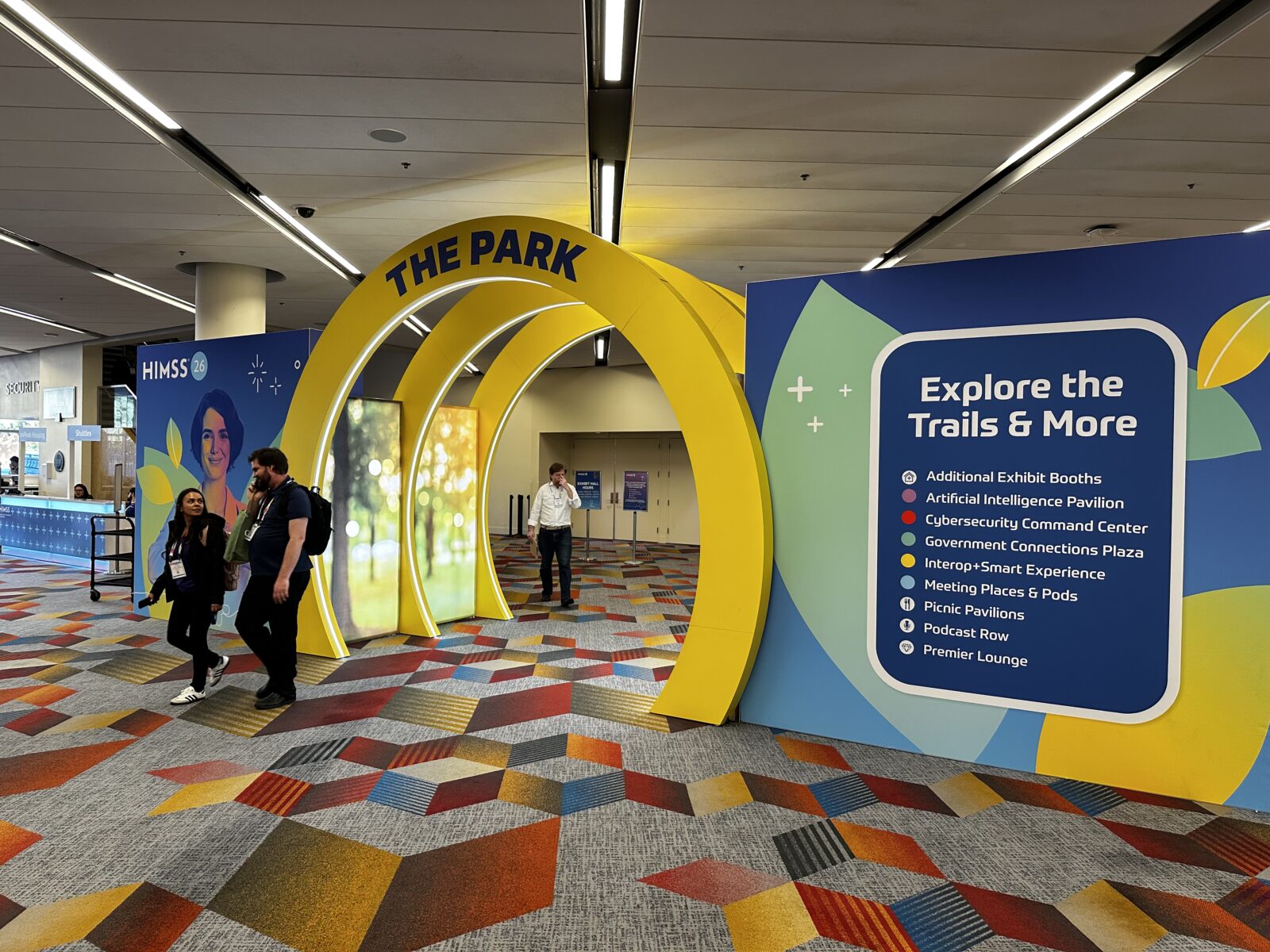
I recently had the opportunity to attend Healthcare Information and Management Systems Society (HIMSS) 2026 in Las Vegas, one of the largest gatherings of healthcare and technology leaders in the world, and across keynotes, booths, and conversations I participated in, one thing was clear: we are entering a new era of digital health, driven largely by the rapid evolution of AI. Sharing a few takeaways from the event, which was both inspiring and practical.
One of the most prominent themes throughout the conference was the rise of “agentic AI.” Rather than single-purpose tools, we’re now seeing AI systems that can take action, autonomously or semi-autonomously, across workflows. This marks a shift from AI as a passive assistant to an active participant in care delivery and operations. For clinicians, this could mean less time spent on administrative tasks like documentation, referrals, and follow-ups, with AI proactively handling or initiating those steps in the background – as an example, this is a step up from AI scribes as we know them now. For patients, these tools could impact their experience by initiating faster responses, more coordinated care, and fewer gaps in their healthcare experience. Major cloud providers like Google Cloud, Microsoft Azure, and Amazon Web Services are building “agent-ready” environments, while companies like Innovaccer are tailoring these capabilities specifically for healthcare.
I also noticed a renewed focus on preventative care (meeting patients earlier in their health journey) by using accessible, embedded technologies. Companies like Canary Health are exploring vocal biomarkers to detect early indicators of conditions such as anxiety, depression, Alzheimer’s, and Parkinson’s, while iSelfie is demonstrating how simple photos can be used to derive vitals like blood pressure, heart age, and even detect conditions like AFib or Flu-A. Wearables like the Apple Watch can prompt users to seek care based on detected health signals, while tools from Theracare AI allow patients to easily share medication information with clinicians.
One important reality stood out while I was walking the exhibit floor: many of the vendors and solutions showcased are not yet widely available in Canada. HIMSS offers a glimpse into where healthcare is heading, but not always where it is today. While adoption may take time, these innovations give us a clearer picture of what’s coming next and how we can begin preparing for it – and another clear theme of the conference was that as innovation accelerates, AI governance needs to be a critical priority. In the opening keynote, Jon McNeil (former President of Tesla and COO of Lyft) emphasized the importance of applying AI thoughtfully and ensuring it’s the right fit for the problem at hand. Organizations are increasingly recognizing that without strong governance frameworks, scaling AI safely and effectively is nearly impossible – and if I may, a quick plug to watch this space for Amplify Care’s AI framework, coming soon!

The conference closed with an inspiring talk from actor Jeremy Renner, who shared his personal journey through a life-threatening accident and recovery. He spoke about the importance of communication across care teams, the need to “help the helpers,” and the role patients play in their own care journeys. It was a powerful reminder that, despite all the excitement around AI and innovation, none of it matters if we don’t keep patient experience at the centre. Technology can enable incredible progress, but only if it ultimately improves how care is delivered and experienced by the people who need it most.
Interested in staying up to date with all things AI? Consider signing up for our AI Amplified news pulse, which isn’t the same as our monthly newsletter – rather, we send you need-to-know updates on AI as they arise.
AI Amplified: Sign up here
« * » indique les champs nécessaires
Get the latest resources and insights
-

Remembering Brian Sinclair: What His Story Asks of Us
Today marks National Day for Truth and Reconciliation, a time to listen, learn and reflect…
-

Making Digital Health Stick: The Crucial Role of Change Management and Practice Facilitation
Good implementation starts by understanding the people who will use the solution every day. Learn…
-

Work With HEAL to Identify the Workflow Challenges That Matter Most
Amplify Care’s Healthcare Experience and Advancement Lab (HEAL) invites clinicians and their care teams to…
-

From Idea to Solution: Get Hands-On with Our Vibe Coding Workshop for Primary Care
Amplify Care’s Healthcare Experience and Advancement Lab (HEAL) is hosting a free, in-person workshop where…