


Virtual Assistants
Automating administrative tasks with virtual assistants.

Discover how AI is transforming primary care in our new digital health hub!

Automating administrative tasks with virtual assistants.

Our Automates program, built on Robotic Process Automation (RPA), has now been sunset and is no longer being offered or maintained.
This work helped us deeply understand the realities of administrative burden in primary care and the importance of designing solutions that fit naturally into clinical workflows. Those lessons remain central to how we approach innovation today.
As technology has evolved, so too has our focus. We are continuing to explore new approaches to workflow automation and clinical support, including emerging AI-enabled solutions.
For transparency and learning purposes, we continue to share information about our previous Virtual Assistants program below. While these tools are no longer active, they reflect important design insights that continue to inform our current and future work.
If you are facing a workflow challenge or have an idea for improving care delivery through technology, we welcome the opportunity to hear from you.

Our virtual assistants were up to 6 times faster than manual labour, allowing clinicians to dedicate more time to patient care and higher-value tasks, helping to ease the heavy workload and reduce stress.

Virtual assistants enabled data in clinical systems to be leveraged for proactive care interventions and population health management – without extra administrative effort, ensuring better outcomes for patients.

By automating administrative tasks, virtual assistants helped alleviate the administrative burden on clinicians, reducing the risk of burnout. With virtual assistants taking on tedious work, clinicians could focus on what really matters: delivering care.

Poppy is a population health management virtual assistant that identifies patients overdue for cancer screenings, stratifies them into priority groups, and automatically initiates follow-up actions to ensure timely care.

Bernie helped improve patient outcomes by identifying missed billing opportunities—starting with diabetes codes—and automated lab requisition generation and follow-ups for patients needing lab work.

Cody cleaned up and standardized patient data, enabling healthcare teams to use this information for more proactive care and easier management of patients with one or more conditions.

Sharon facilitated the seamless sharing of care plans between EMRs and the provincial repository, ensuring that all members of a patient’s care team had access to the same information in real-time.
We’d love to connect with you! Feel free to reach out below.
Back in 2021, we created a support to help clinicians to more efficiently document their patients’ COVID-19 vaccination status. This saved one busy clinic an estimated 87 hours of manual data entry!


Insights from the AI scribes burdens pilot that Amplify Care supported with Doctors of BC,…

Sharing some learnings from an AI scribes evaluation in Ontario that shows how these new…
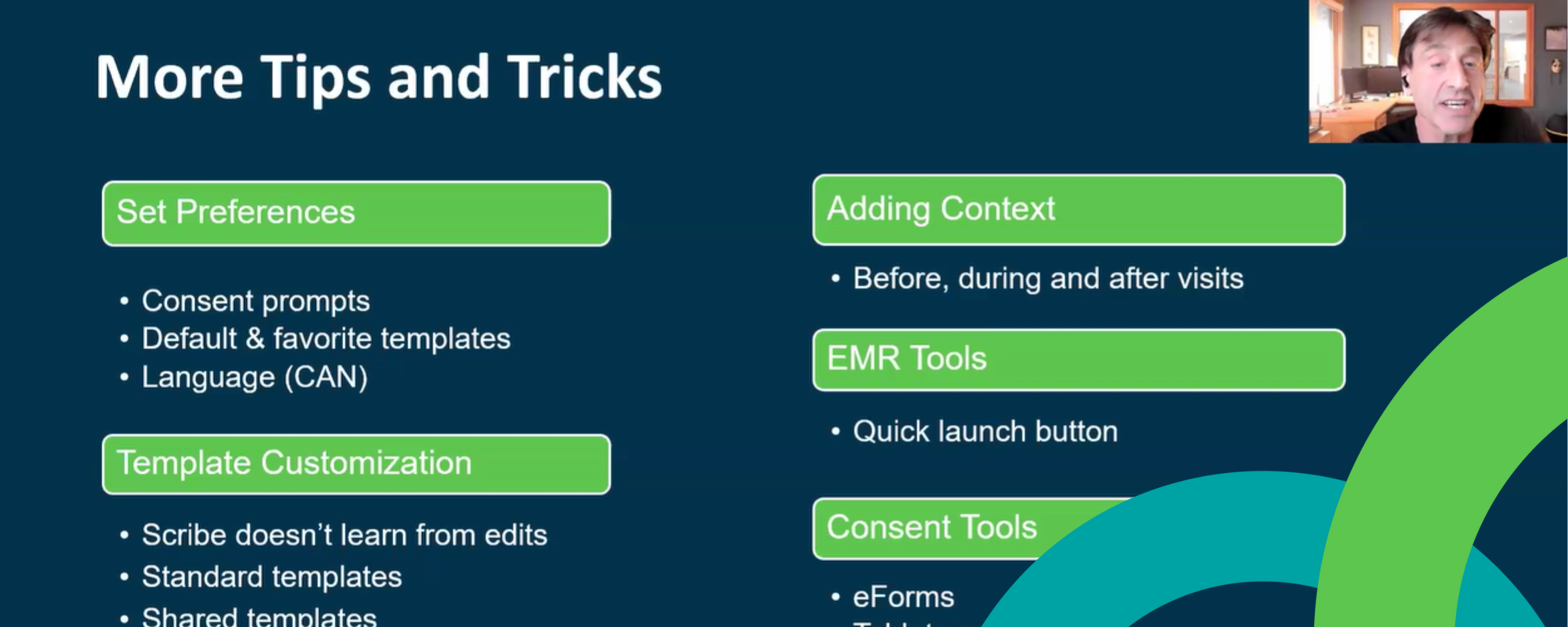
In our recent webinar, From Burnout to Brilliance: Leveraging AI Scribes and Other AI for…

We’re seeing exciting progress across Canada with the advancement of AI scribes in primary care…