



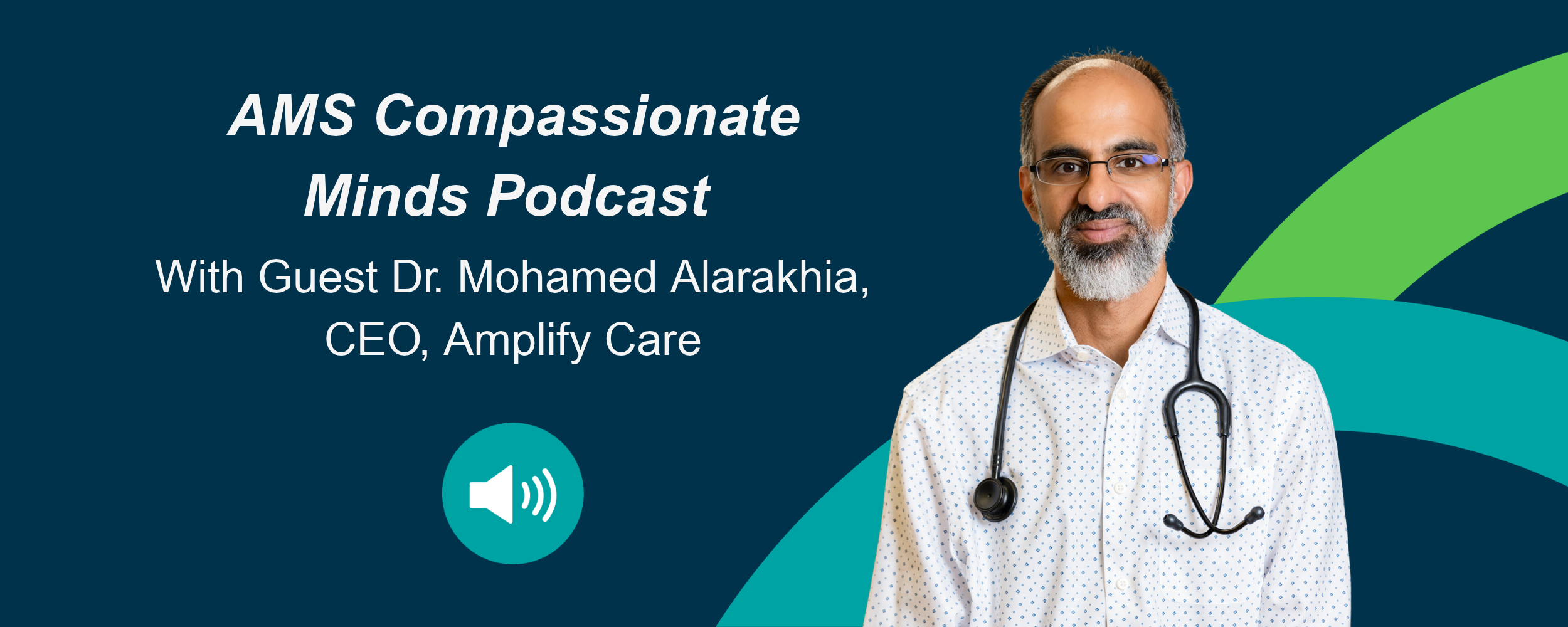
Putting the Human Connection at the Centre of Digital Health: Podcast on the Future of Primary Care
How can technology help create a more connected, compassionate and sustainable healthcare system? It’s a question at the heart of a recent episode of the AMS Healthcare Podcast Compassionate Minds, featuring Amplify Care CEO Dr. Mohamed Alarakhia in conversation with host and AMS Healthcare CEO, Helen Angus.
Drawing on more than 15 years of experience supporting primary care transformation, Mohamed shares his perspective on the evolving role of digital health, the opportunities and challenges of artificial intelligence (AI), and what it takes to ensure innovation genuinely improves care for both patients and clinicians.
Starting with the people behind the technology
Throughout the conversation, Mohamed emphasizes that successful digital health transformation starts with understanding the people who use the technology every day. At Amplify Care, that means working directly with clinicians, administrators and patients to identify their challenges before looking for solutions. Through a structured co-design approach, Amplify Care brings healthcare teams together to understand their pain points, explore potential solutions and evaluate whether those solutions are making a meaningful difference. As Mohamed explains, technology should never be introduced for its own sake. The question should always be: Does it solve a real problem, improve the patient experience or save clinicians time?
This approach has helped Amplify Care engage more than 20,600 physicians and nurse practitioners and support over five million electronic referrals, contributing to shorter wait times and reduced administrative burden across the healthcare system.
Navigating the opportunities and challenges of AI
The conversation also explores the rapid evolution of AI in healthcare, including the growing adoption of AI-powered clinical scribes. Mohamed reflects on Amplify Care’s early exposure to the technology approximately seven years ago and how dramatically it has advanced since then. While AI scribes are helping clinicians reduce documentation demands, Mohamed sees even greater potential in how these tools can support patient engagement. One particularly meaningful application is providing patients with accessible summaries of their appointments, helping them better understand their diagnosis, care discussions and next steps.
However, he also stresses the importance of responsible adoption. With clinicians increasingly experimenting with AI tools, healthcare organizations need to provide clear guidance, appropriate guardrails and the information needed to make informed decisions. Simply blocking access to emerging technologies isn’t necessarily the answer; instead, the focus should be on helping clinicians understand both the opportunities and the risks.
A future where technology enables more human care
Looking ahead, Mohamed envisions a healthcare environment where technology becomes less visible in the clinical encounter, allowing clinicians to focus more fully on the person in front of them. From personalized risk information and clinical decision support to stronger team-based care and more proactive approaches to population health, he sees tremendous potential for digital tools to help clinicians make better-informed decisions and engage patients more meaningfully in their own care.
Ultimately, the goal isn’t to add more technology to an already strained healthcare system. It’s to use technology thoughtfully to create capacity, improve the experience of care and strengthen the human relationships that make healthcare meaningful.
Leadership rooted in shared purpose
The conversation closes with Mohamed reflecting on his own leadership philosophy. He describes his role as creating a shared vision, supporting people to pursue their passions and removing barriers so they can achieve their goals. He sees healthcare as a community of passionate people who want to make things better, and believes that meaningful change happens when those people come together around a common purpose.
It’s a fitting reminder that while technology can help move healthcare forward, people will always be at the centre of that progress.
Listen to the full conversation to hear more about the future of primary care, compassionate leadership, responsible AI adoption and the opportunities to build a more connected healthcare system.
Get the latest resources and insights
-
Putting the Human Connection at the Centre of Digital Health: Podcast on the Future of Primary Care
In a recent episode of the AMS Healthcare Podcast Compassionate Minds, Amplify Care CEO Dr.…
-
Digital Health Week 2026: Building More Connected Care Experiences
This Digital Health Week, we’re exploring what connected care means to us at Amplify Care.…
-
Who Owns the Work? We All Do. We Are All the OHT.
A guest blog post by Angela Martin, Practice Facilitator and Digital Health Lead who speaks…
-
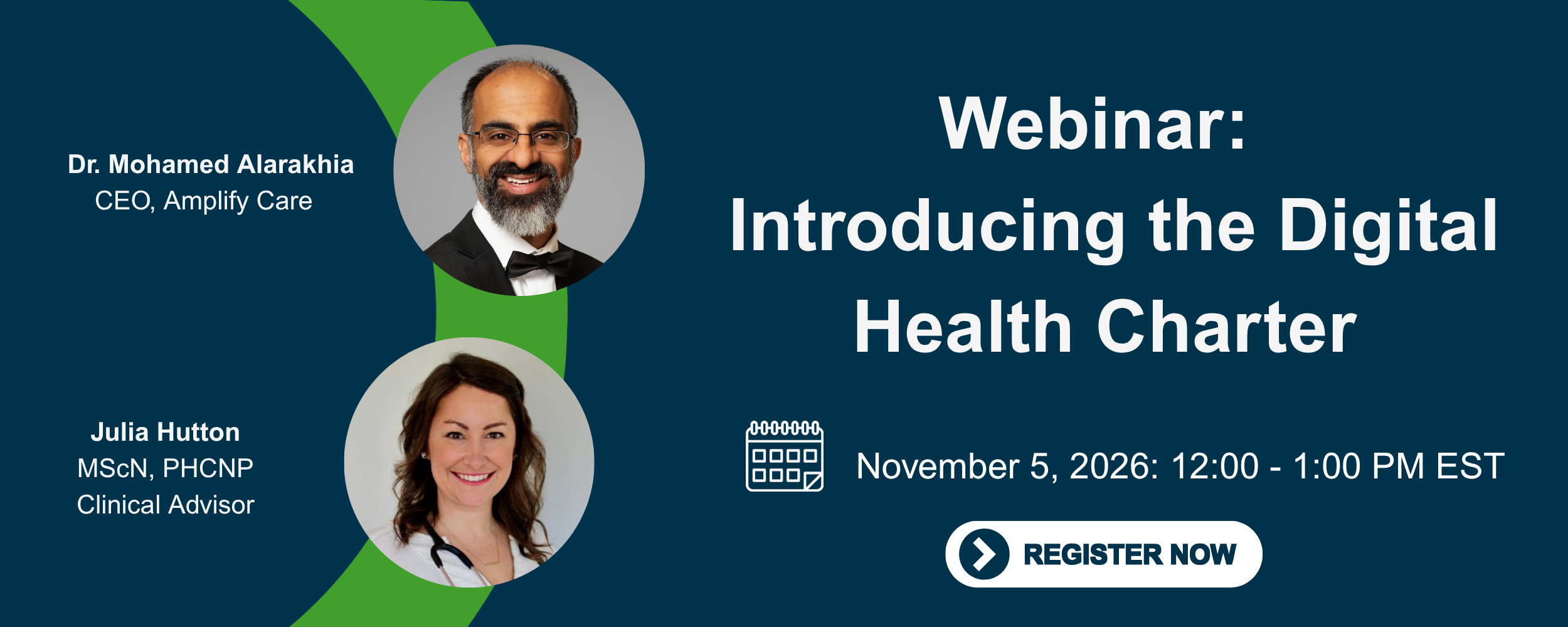
Upcoming Webinar: What Should Clinicians Expect from Digital Health? Introducing the Digital Health Charter
Join us on November 5, 2026, for a webinar introducing the Digital Health Charter, exploring…